

By Cigdem Bildirici, Vice President, Enterprise Sales
Reconceiving the role of L&D at Learning Technologies 2026
Learning Technologies 2026 offered no shortage of discussion around AI, skills, adaptive platforms and workforce transformation. But beneath the familiar conversations a more structural shift took shape: the role of learning and development (L&D) is being redefined under new and pressurised business expectations.
If there’s one thing that this year’s event made clear, it’s that organizations no longer evaluate L&D on whether learning is available or engaging. They evaluate it on whether it can demonstrably build workforce capability in a way that moves a business forward.
This shift matters as strategy is moving faster than capability with 84% of organizations increasing their investments in AI.1 However, the majority of organizations have yet to redesign capabilities around AI. This leaves a significant gap and creates a real execution risk.
From our perspective as the edX Enterprise team, we see an opportunity for L&D to become a performance partner within their organization:
- We know from our ongoing conversations with organizations that the most effective way to build true capability is through richer, contextualized, and human-led experiences. One theme comes up repeatedly: learning needs to be tied to business objectives if it is going to drive meaningful impact, and drawing on the shared perspectives of a cohort is vital to making that stick. As the 2026 Fosway Digital Learning report highlights,2 cohort-based learning remains an underdeveloped area, even though we know it’s one of the most impactful ways to learn.
- Learning outcomes must be tied to business priorities. In our conversations with organizations, we consistently see the same challenge emerge: learning creates the greatest value when it is directly connected to strategic business objectives.
To help organizations to close this gap, edX has partnered with Microsoft to offer a specialized suite of courses designed to move your teams from AI-curious to AI-driven. The goal? Understanding your organization’s current AI maturity and aligning your learning and development investment with specific business outcomes.
AI is turning the attention back to humans
A number of presentations at Learning Technologies 2026 put the human element center stage against the backdrop of an environment dominated by emerging technologies.
As the keynote speaker Giovanni stated in his talk “The Augmented Workforce”: “L&D is not optional; it is entirely neurological.”
What AI currently exposes is a question many organizations cannot answer: which human capabilities become more critical as cognitive tasks are increasingly offloaded? The underlying concern is that a lack of regular exercise could cause reasoning, articulation, and judgment to weaken through underuse. The organizational symptom is subtle: work may still arrive faster and appear polished, while becoming increasingly homogeneous and intellectually thin. This is a workforce issue that sits beyond AI adoption metrics. And it reinforces why organizations are shifting toward enablement and capability building.
The market is moving to capability language
Capability is deployable business readiness. It consists of a combination of interconnected skills required to achieve the strategic priorities that move a business forward.
Knowing which skills exist inside the workforce does not automatically mean the organization can execute better or make accurate decisions. This was one of the central arguments in our session, “From Content to Capability: A Leadership Lens”: future competitive advantage will not come from giving people more content to consume, nor from producing more refined taxonomies of what people should know.
It will come from designing the systems and infrastructure that deliberately build applied capability against strategic business priorities.
That means shifting the core L&D question from: “What learning are we delivering?” to “What organizational capability are we strengthening?”
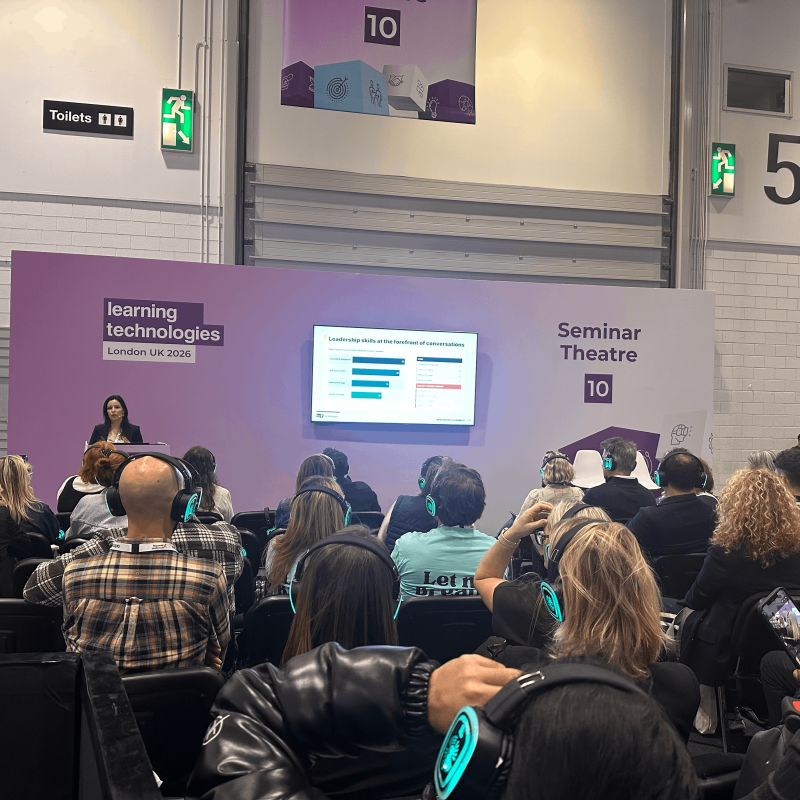
Additionally, as the demand for technological skills increases, so does the need for leadership skills. These skills are needed at every level across the organization, in order to both navigate a fast-changing environment and work with emerging technologies.
Capability building is becoming critical as workforce development itself moves away from episodic and task-related training toward learning experiences that are contextualized and embedded in work.
L&D is entering an accountability era
Perhaps the most notable signal from Learning Technologies 2026 was in fact, business performance-related. L&D leaders are being asked harder questions:
- What capability gap did this close?
- What execution risk did this reduce?
- What business priority did this accelerate?
This marks an important shift. For years, much of workplace learning has been organized around activity metrics. The next phase will be organized around business impact.
L&D is being asked to achieve:
- Tighter linkage between learning and strategic initiatives
- Greater partnership with business leaders
- A willingness to define success in financial terms
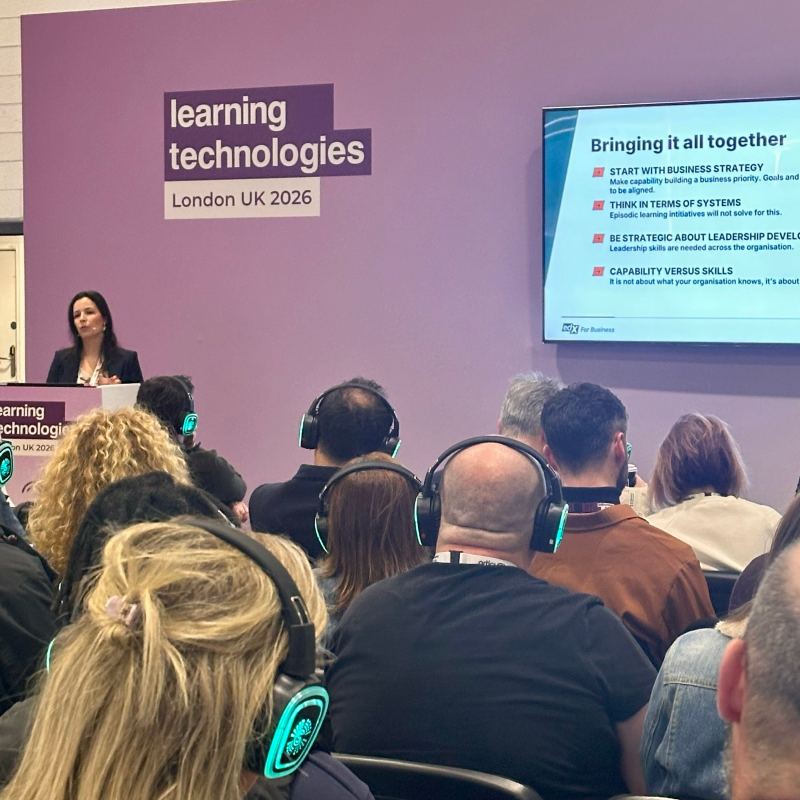
If Learning Technologies 2026 confirmed anything, it is that access to more content is no longer where competitive differentiation sits. As we shared during our presentation on Day 1, how we think about and approach learning must adapt:
- Start with the business strategy
- Think in terms of systems
- Be strategic about leadership development: leadership skills are now needed at every level across the organization
- Connect learning outcomes to business value
It’s no longer about what your organization knows, it’s about what it can do.
Join our edX Future Skills Advisory Board
To help build a bridge and facilitate conversations around these types of challenges and themes outlined above, edX is convening a Future Skills Advisory Board, bringing together senior leaders dealing with workforce development and learning to engage in a peer-to-peer exchange.
We have a couple more places available for Advisory Board members to join. If you would like to contribute to the discussion around these strategic challenges, we invite you to reach out via this form.
Footnotes:
[1] The State of AI in the Enterprise. (2026). Deloitte. Retrieved June 4, 2026.
[2] Fosway 9-Grid Digital Learning. (2026). Fosway Group. Retrieved June 4, 2026.