

By Christyl Potgieter, Director Partner Marketing, Enterprise Global
Last month at EduTech Asia in Singapore, thousands of educators, policymakers, employers, and EdTech innovators converged around one common question: How do we prepare learners and workers for an AI-driven future?
Representing edX Enterprise, I had the privilege of leading a fireside conversation with Dr. Paulina Pannen, Senior Expert at the Indonesia Cyber Education Institute (ICE) of the Universitas Terbuka. Together, we unpacked the real-world implications of AI for workforce readiness, beyond hype, fear, and technocentric disruption.
Our discussion centered on one idea: AI isn’t just reshaping jobs, it’s redefining how we learn, teach, and build career capital.


AI Is Reshaping the Workforce, and the Classroom
Work is transforming faster than education systems can respond.
- According to the World Economic Forum Future of Jobs Report, 2025, 39% of workers’ core skills are expected to change by 2030.
- And, according to a McKinsey Report from earlier this year, employees are three times more likely than their C-suite leaders expect, to be using generative AI for at least 30% of their daily work already.
This means AI adoption isn’t simply a technology issue, it’s an employability issue. It’s become imperative for students, mid-career professionals, and educators to build new competencies, from analytical thinking through to AI literacy, in order to remain employable.
But as demand for AI-driven skills accelerates, so does the volume of learning options. With thousands of short courses, bootcamps, certificates, and online programs flooding the market, not all are aligned to real workforce needs, and not all are backed by credible, industry-recognized standards.
In a saturated marketplace, how can students, workers, and educators recognize the most reliable learning pathways? How can governments and institutions ensure that what learners study, actually leads to employment outcomes? Short answer: Micro-Credentials.
Micro-Credentials are Becoming Career Currency
Across Asia, micro-credentials are rapidly being embedded into workforce upskilling policies, including Indonesia’s Regulation which places them at the center of higher education quality assurance. Similarly, in the Philippines, both the Commission on Higher Education (CHED) and the Technical Education and Skills Development Authority (TESDA) are formalizing micro-credential pathways to accelerate employability.
At EduTech Asia, we spotlighted how edX’s global partnerships with institutions like Microsoft, IBM, Google Cloud, and Georgia Tech are aligning short, rigorous, stackable programs to industry-defined skill clusters.
Building on these global partnerships, edX and Microsoft have launched the Microsoft Campus Academy, a first-of-its-kind program for higher education institutions that helps close the tech skills gap. The Academy offers 11 Microsoft Professional Certificates in AI, Data, Software Development, and Cybersecurity, giving students practical, stackable skills that directly translate to career-ready credentials and set them apart in a competitive job market.

These credentials are no longer “alternative”, they are pathways to employability, enabling learners to stack modules into degrees, executive certificates, and technology specializations that directly translate to career advancement.
Moving from AI Fear to AI Fluency
Educators today are becoming learners again, building micro-credentials in AI, ethics, data, and critical thinking to responsibly integrate generative tools into their classrooms.
At edX, we see career educators pursuing learning in areas such as:
- AI prompting and digital fluency
- Data analysis and visualization
- Human-centric leadership
- Critical thinking and creative reasoning
As Dr. Pannen emphasized, ethical guardrails and transparency must accompany innovation because without strong governance, even the most powerful technologies risk widening existing skills gaps. This principle is central to how edX approaches industry partnerships at scale.
Human + Machine Collaboration Is Redefining Teaching
AI isn’t replacing educators, it’s becoming the ultimate teaching assistant. Rather than competing with teachers, AI is taking on repetitive tasks, amplifying personalization, and freeing educators to focus on what humans do best: coaching, mentoring, assessing judgment, and cultivating critical thinking.
At EduTech Asia, we highlighted several examples on how this collaboration is already reshaping learning:
- Xpert, our AI-powered tutor and learning assistant, giving students real-time feedback, answering questions, and supporting comprehension without replacing the instructor’s expertise.
- Georgia Tech’s David Joyner recently shared how he created a digital teaching avatar, D.A.I.vid, that can guide students through complex concepts, serve as an interactive lab partner, and support learners around the clock.
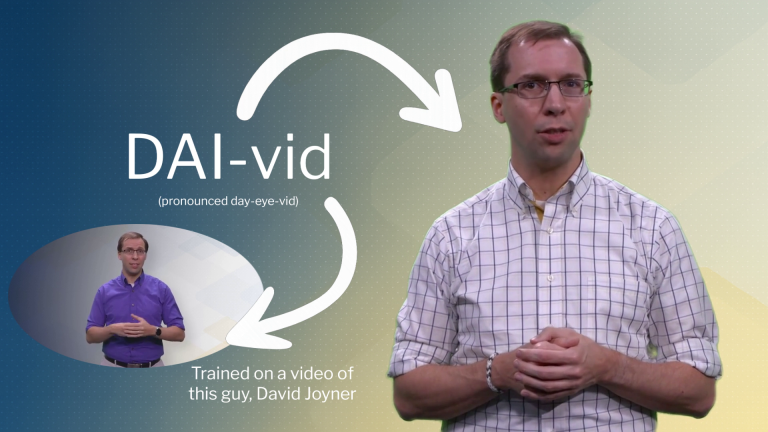
These make high-quality learning scalable and personalized, while maintaining the essential role of educators, mentors, and human judgment. Instead of spending hours grading or generating basic lesson content, instructors can focus more on critical pedagogy, hands-on guidance, ethical debate, teamwork, and higher-order skills.
Human expertise + AI assistance = Deeper learning, better teaching, and stronger employability outcomes.
Let’s Turn Credentials Into Career Capital
The future of learning is human-led, AI-accelerated, globally connected, and stackable.
The ultimate goal? Turn credentials into career capital.
Thank you to our partners, attendees, and the EduTech Asia community. Together, we are shaping a world where access to employability-driven learning can scale across borders, sectors, and life stages.
If you missed us, you can still connect with the edX Enterprise team to explore collaboration opportunities for workforce development. Contact us to start the conversation.